

Forecash- AI powered
Mobile App

Overview
Forecash is a fintech product concept designed to help users understand their financial position, track goals, and make more confident money decisions through a simplified, AI-assisted financial dashboard.
The goal was to move beyond basic budgeting and create an experience that helps users connect income, expenses, savings goals, and future planning in one clear interface.
Client:
Personal Project
Year:
2025
Category:
Product Strategy
/
Mobile/ Web App
Team
2 Product Designers




The problem Statement
Personal finance management is no longer just about tracking income and expenses. In 2025, 86% of Americans reported concern about their financial situation, while 66% experienced high or moderate financial anxiety. Inflation, everyday expenses, debt, and unexpected costs continue to make financial planning stressful and difficult.
At the same time, users are losing visibility into recurring costs. Consumers estimate they spend around $86/month on subscriptions, but actual itemized spending averages $219/month, more than 2.5x higher than expected.

Oppurtunity
With 54% of bank customers already using mobile apps as their top way to manage accounts, users are comfortable with mobile-first financial tools. However, most apps still focus on displaying data rather than helping users predict, understand, and improve their financial decisions.
User Interview
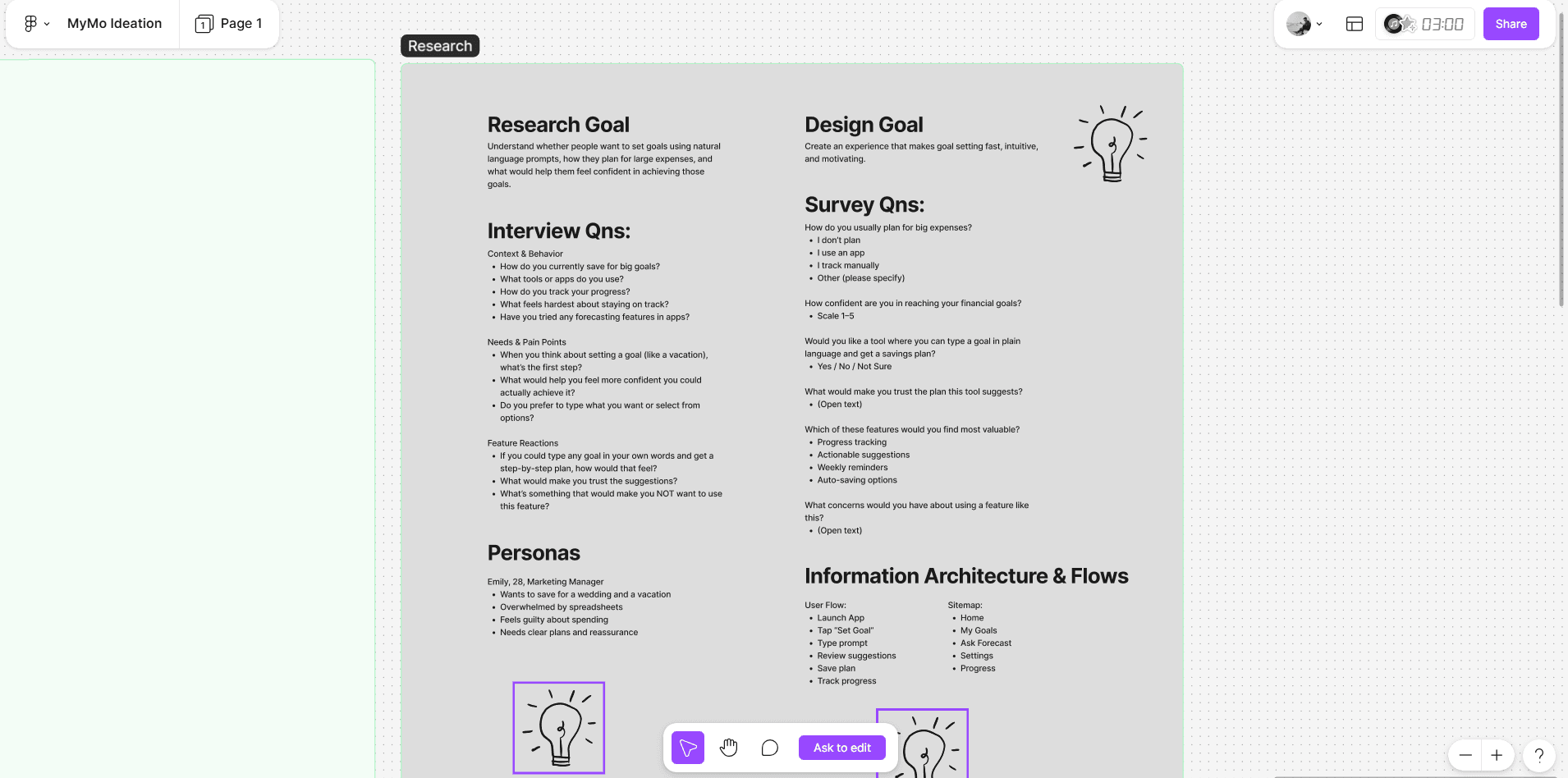
To better understand student financial behavior, I conducted qualitative research with university students.
Research Methods
• 6 interviews with college students managing their own finances
• Survey responses about student spending habits
• Competitive analysis of existing budgeting apps
Research and Insights
I conducted usability tests with target users to validate design decisions and identify areas for improvement. The test consisted of an interview and completing specific task on an AI chat box in banking and financial wellness apps.

Usability Test #1- Erica AI (BOA)
"I tried asking the AI about my financial goals in my own words, but it only offered a few preset questions to choose from.
When I typed anything outside those options, it could not give me an answer."
Usability testing showed that limiting user input to predefined selections reduces the usefulness of an AI assistant. Financial needs are often unique, and users expect the freedom to phrase questions naturally. When the system fails to respond to anything beyond its scope, it creates frustration and prevents deeper engagement with the tool.
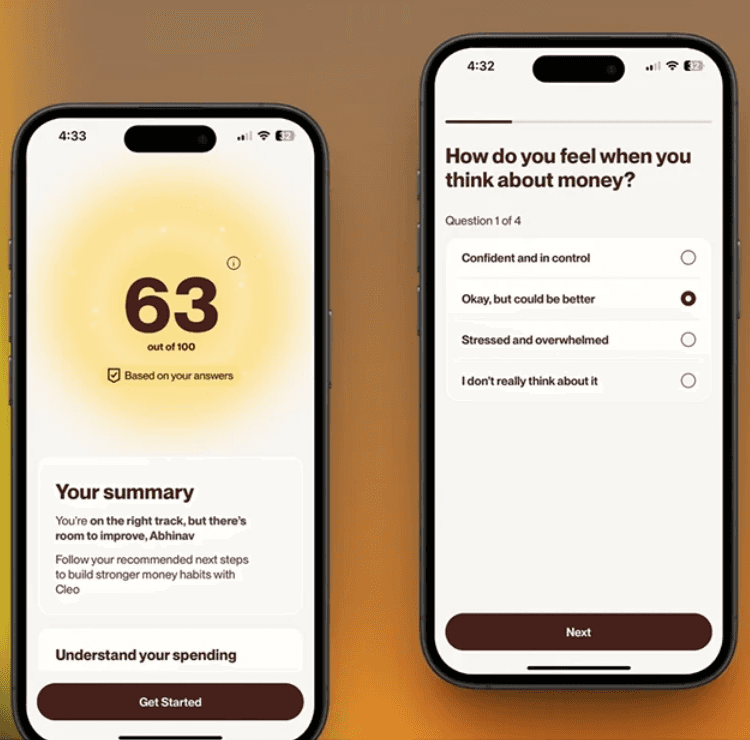
"Usability Test #2- Cloe AI"
"The AI responds in a friendly and engaging way, but it cannot give me a personalized forecast or plan based on my specific situation.
It feels like I am getting generic advice instead of something tailored to me."
Testing revealed that while personality and engagement are strengths, the absence of personalized forecasting leaves a significant gap for users who want actionable, data-driven insights. Financial wellness tools must go beyond general tips and provide tailored strategies that help users reach their individual goals.
Affinity Mapping
The affinity mapping exercise distilled diverse user insights into clear, actionable themes. By organizing feedback into clusters, we identified the most pressing financial needs, behavioral patterns, and emotional triggers that influence decision-making.
These groupings revealed not only what features users expect from a personal financial development tool, but also how they naturally progress through their relationship with it from initial awareness to active engagement.
This understanding formed the foundation for building ForeCash’s Customer Journey Map, ensuring each stage addresses a real and validated user need.

User Segments
Primary Audience:
Young professionals (22–35) juggling irregular income
People who don’t want strict budgets but want clarity and control
Goal-oriented individuals saving for milestones (debt repayment, travel, business, investments)
Persona: Busy Independent
Professionals
Freelancers and early-career professionals managing multiple responsibilities, irregular income, and limited time for financial planning.
Key traits:
Occupation: Freelancers, consultants, junior managers
Age 20- 30
Financial behavior: Inconsistent planning, reactive spending
Devices: Mobile-first, laptop for detailed planning
Mindset: Goal-oriented but time-poor
Based on 6 user interviews
Top interview insights
Users want actionable recommendations, not complex dashboards
Budgeting feels effort-heavy and easy to postpone
Personal goals like travel often get delayed because affordability feels unclear
Mobile experiences work best for quick check-ins
Design oppurtunity
Create a finance experience that helps users:
understand spending patterns quickly
forecast future affordability
plan personal goals like vacations with confidence
reduce stress through clear, actionable suggestions
“I want something that helps me figure out what I can afford without making me sit down and do a full financial analysis.”
James R
Business Owner
The Result
User confidence rose dramatically, with a drop in abandonment during key transactions. Nova now stands out in a crowded space with a bold, secure, and scalable interface.

AI as a planning layer, not a novelty feature
The conversational layer was designed to help users ask questions naturally, explore trade-offs, and receive tailored guidance. This shifted the AI role from “assistant that answers generic prompts” to “financial partner that helps interpret personal context.”

Tracking financial decisions
ForeCash is an AI-powered fintech platform that combines users’ spending, savings, investments, subscriptions, and other financial decisions into one smart ecosystem, helping them track, manage, and improve their financial life through a single intelligent tool.

Seamless Across Devices
The interface maintained consistency across web and mobile, ensuring a familiar, fluid experience whether planning a purchase at home or checking budgets on the go.

Goal-linked financial planning
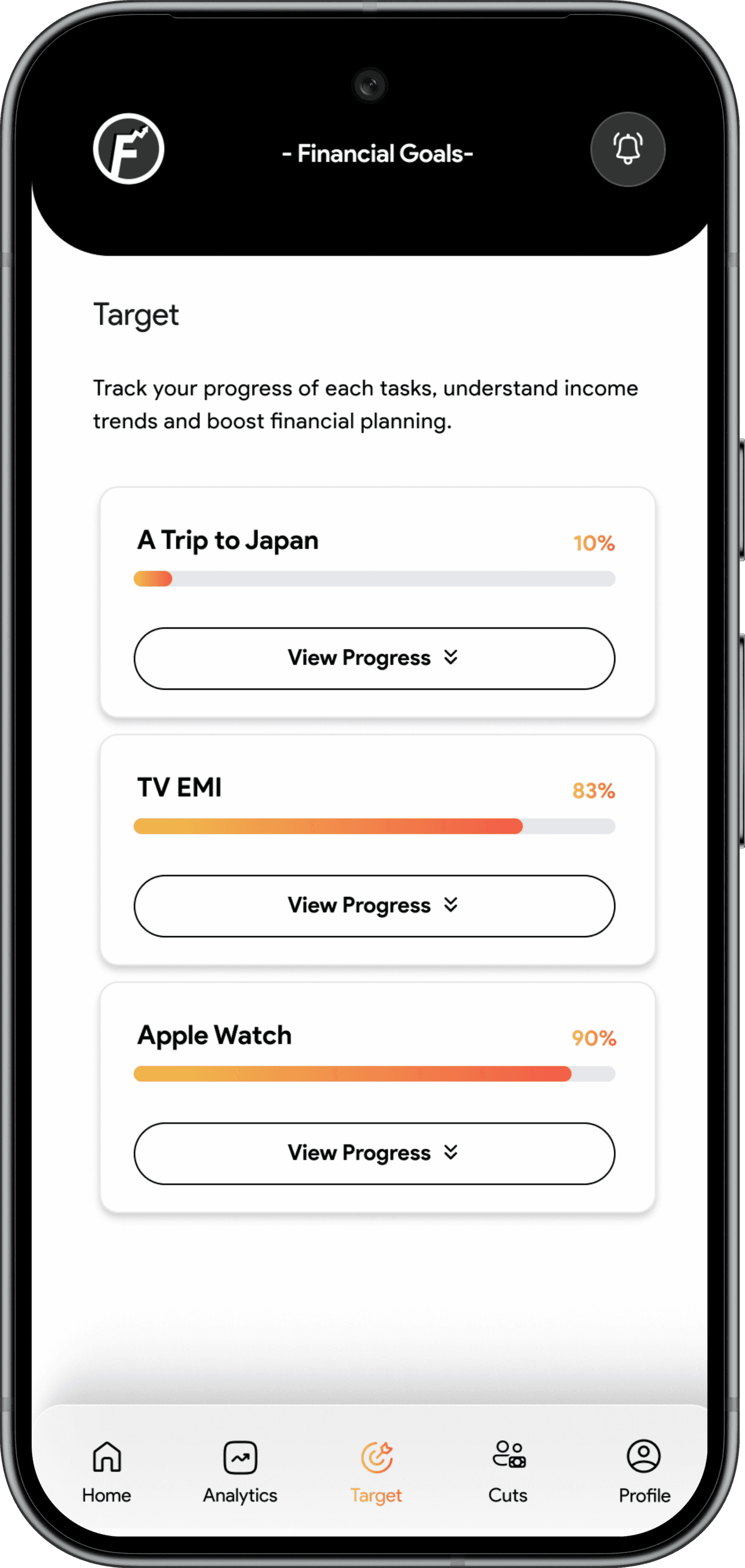
Savings goals and upcoming financial commitments were integrated into the core experience so users could connect everyday spending decisions to longer-term outcomes.
Design system
I created the ForeCash design system to ensure clarity and consistency across the platform. I chose a warm, professional color palette with clear feedback states, a clean sans-serif type for readability, and rounded components with subtle shadows for a modern feel.
Simple icons, customizable avatars, and a streamlined navigation bar make the experience approachable, while progress indicators keep users motivated.

A Chat Interaction
The AI video demonstrates how conversational assistance guides users with smart suggestions, reminders, and financial nudges, blending automation with a human-like experience.
Final Prototype
The feedback from usability testing shaped the final iteration of ForeCash into a platform that not only forecasts savings but actively motivates users to achieve their biggest financial goals.